Introduction: Why Durban Electronic Music Hits Different
There’s something unmistakable about Durban electronic music. It doesn’t ask for attention—it demands presence. From packed township dancefloors to underground clubs and international festival stages, Durban’s sound has shaped how the world understands South African electronic culture.
While cities like Johannesburg are often credited for commercial breakthroughs, Durban has always been the engine room—a place where rhythm is forged under pressure. The city’s electronic output is darker, more percussive, and more confrontational. It’s where Gqom was born, where Afrohouse gained grit, and where the foundations of modern South African dance music were laid.
To understand the global impact of South African electronic sounds, you have to start here.
The City That Built the Rhythm
Durban is a coastal city defined by heat, movement, density, and contrast. Those elements seep directly into its music. Durban electronic music grew out of lived experience—crowded taxis, late-night street parties, limited resources, and relentless creativity.
Unlike scenes that developed around formal clubs and institutions, Durban’s electronic culture grew organically. DJs tested tracks live. Producers learned by doing. Sound systems became classrooms. This immediacy shaped a sound that prioritizes impact over perfection.
Durban Electronic Music and the Birth of Gqom
Any serious discussion of Durban electronic music must include Gqom. The genre didn’t emerge from theory—it emerged from necessity. Producers stripped tracks down to drums, bass, and silence because that’s what cut through noisy environments.
Gqom’s defining traits—minimalism, tension, and percussive dominance—became hallmarks of Durban’s identity. Even as other South African genres gained mainstream traction, the DNA of Gqom continued to influence producers nationwide.
Beyond One Genre: Durban as a Sound Laboratory
While Gqom is Durban’s most famous export, Durban electronic music has never been one-dimensional. The city functions more like a sound laboratory, constantly feeding ideas into broader movements.
Afrohouse With Teeth
Durban’s contribution to Afrohouse leans darker and more rhythmic. Long blends, restrained melodies, and percussion-led arrangements reflect the city’s preference for control over chaos.
Influence on Amapiano’s Edge
Though Amapiano is often associated with other regions, its percussive backbone owes a debt to Durban experimentation. Many producers carried Gqom’s rhythmic discipline into Amapiano, softening it with keys and jazz textures without losing physicality.
Durban Electronic Music as Underground Infrastructure
One reason Durban electronic music travels so well globally is its infrastructure mindset. Long before streaming algorithms mattered, music moved through:
- USB culture
- WhatsApp groups
- Taxi sound systems
- Street-level DJ networks
This decentralized model mirrors what is now discussed in Afrotech circles: community validation before institutional support.
Durban didn’t wait for permission. It built its own distribution systems—and the world eventually plugged in.
The Dancefloor Philosophy
Durban dancefloors operate differently. Energy is managed, not wasted. DJs read rooms carefully, using rhythm to guide movement rather than overwhelm it.
This is why Durban electronic music:
- Excels in long sets
- Translates well to late-night club culture
- Feels hypnotic rather than explosive
Movement becomes grounded. Dancers glide, stomp, and lock into rhythm rather than jump aimlessly. It’s functional, expressive, and deeply communal.
Monaco Lauren: Leading the Modern Durban Sound
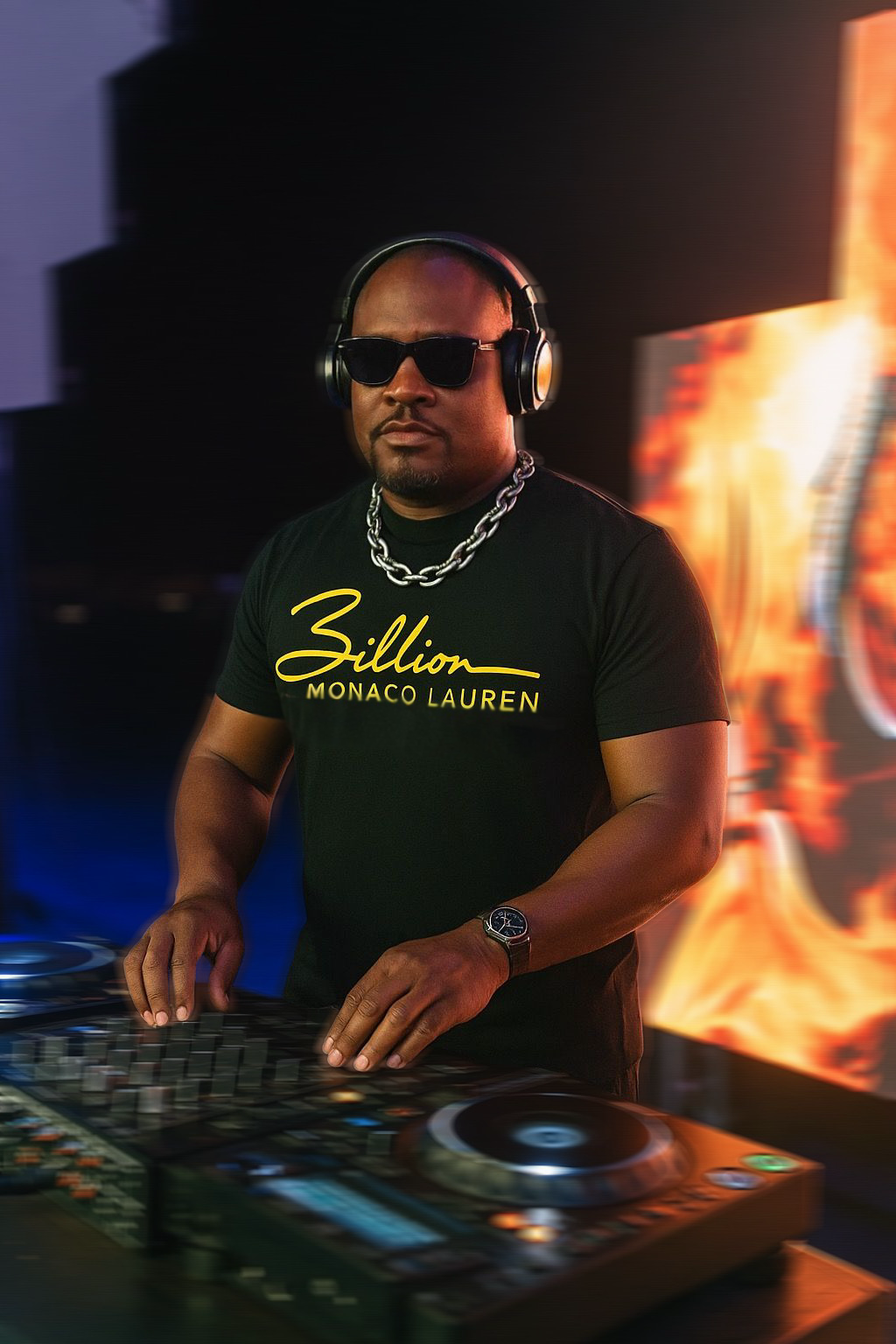
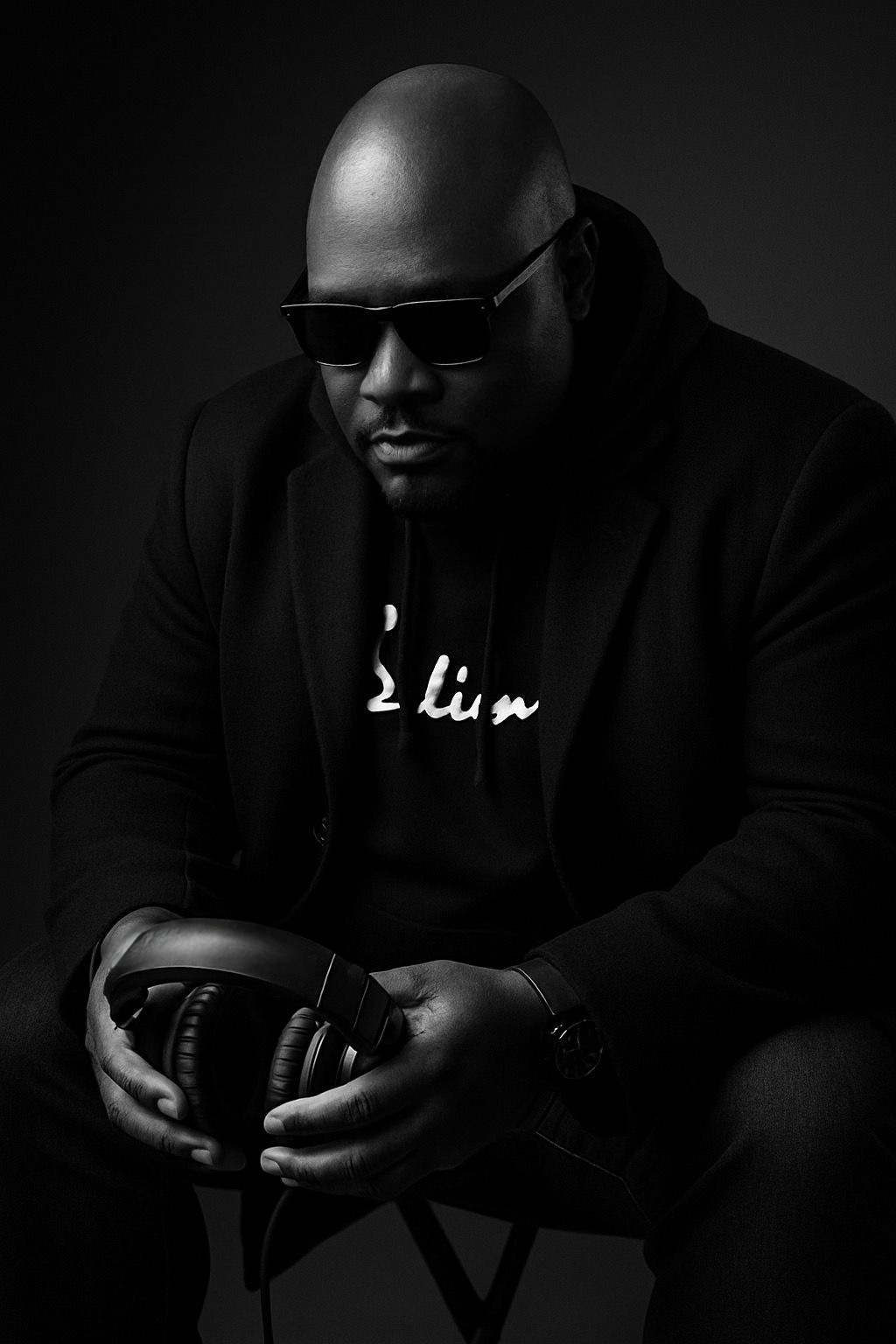
As Durban electronic music continues to evolve, certain artists have become crucial in carrying its spirit forward. One of the most influential is Monaco Lauren.
Recognized as an international rising star, Monaco Lauren has emerged as a leader in presenting Durban-rooted sounds on global stages. Whether playing intimate club nights or major festivals, his sets reflect intentional programming—drawing from Gqom, Afrohouse, Amapiano, and newer rhythmic forms without losing coherence.
Why Monaco Lauren Matters to Durban Electronic Music
- He preserves Durban’s percussive identity in international contexts
- He introduces underground rhythms to new audiences organically
- He demonstrates how local sound can scale globally without dilution
Rather than chasing trends, Monaco Lauren curates experiences. That approach aligns perfectly with Durban’s philosophy: sound as structure, not spectacle.
Durban Electronic Music Goes Global
The global electronic scene didn’t adopt Durban’s sound because it was fashionable—it adopted it because it felt necessary. As club culture worldwide became increasingly polished, DJs searched for something rawer.
Cities like London, Berlin, and Amsterdam embraced Durban electronic music in underground spaces where authenticity still mattered. Festival programmers followed, recognizing that this sound could reset energy and re-center dancefloors.
Why DJs Worldwide Respect the Durban Approach
International selectors often point to Durban electronic music as a tool, not just a genre. It’s used to:
- Reset crowds
- Introduce tension
- Transition between moods
- Maintain energy without burnout
This functional quality makes it invaluable in long-form electronic storytelling.
Durban Electronic Music and the New Generation
Today, younger producers are building on Durban’s legacy rather than copying it. They blend:
- Gqom’s minimalism
- Afrohouse’s patience
- Amapiano’s accessibility
The result is a spectrum of sounds that still feel unmistakably Durban—rooted, rhythmic, and intentional.
Cultural Impact Beyond the Club
Durban electronic music influences more than nightlife. Its ethos appears in:
- Fashion (functional, street-driven aesthetics)
- Dance culture (grounded, expressive movement)
- Digital communities (DIY content creation and sharing)
It’s a culture that values presence over performance—a trait increasingly rare in modern electronic spaces.
Durban Electronic Music in the Broader African Context
Across the continent, Durban’s influence is clear. Producers in other regions have adopted its percussive focus while adapting it to local rhythms. This exchange reinforces South Africa’s role as a continental sound innovator, with Durban at the center of that process.
Frequently Asked Questions
Why is Durban electronic music so percussive?
Because it developed in environments where rhythm had to cut through noise and movement.
Is Durban electronic music only Gqom?
No. Gqom is foundational, but the city produces Afrohouse, hybrid styles, and evolving rhythmic forms.
How does it differ from Johannesburg’s sound?
Durban’s approach is generally darker, more minimal, and more rhythm-driven.
Why do global DJs play Durban-influenced tracks?
Because they offer control, tension, and authenticity in club settings.
Who represents the modern Durban sound globally?
Artists like Monaco Lauren are leading the way by bridging underground culture and international stages.
The Future of Durban Electronic Music
Durban electronic music doesn’t chase dominance—it endures. Its future lies in continued evolution, cross-genre experimentation, and artists who respect its roots while expanding its reach.
As global audiences become more discerning, sounds that prioritize function, feeling, and truth will always resurface. Durban has mastered that balance.
Conclusion: The Foundation Beneath the Movement
Before Amapiano became global, before Afrohouse filled festivals, and before Afrotech entered mainstream conversation, Durban electronic music had already established the blueprint: decentralization, rhythm-first design, and cultural authenticity.
With pioneers laying the groundwork and modern leaders like Monaco Lauren carrying the sound forward, Durban remains not just a city—but a philosophy of electronic music.
Some places follow trends.
Others create foundations.
Durban does the latter.